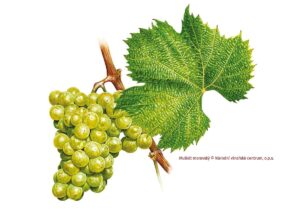
The variety from which wine is produced is the most important factor influencing its taste. However, one variety grown in the same place may yield two very different wines. On the other hand, two different varieties cultivated separately may give very similar wines. This is due to other factors – location, climate, soil, cultivation and production methods, vintage and the vintner – that also influence taste and quality.
The grapevine belongs to extensive Vitis genus of which thousands of varieties are grown worldwide, some destined for wine production, others for direct consumption or making raisins.
The Czech Republic is a country with a very rich varietal palette. Vines are cultivated on 18 000 ha, the vast majority of these are for making wine and less 1% represent rootstock and table grapes. 71% of the total vineyard area is planted with white varieties. Some of the varieties represented are cultivated around the world , others are found only in certain areas, some come from abroad and others are unique to the region. Our best-known local new crossings are Palava, Moravian Muscat and Aurelius in whites, with Andre, Cabernet Moravia and Neronet for reds.
Quality wines are produced from 35 white and 26 red grape varieties listed in National Register of Plant Varieties and from varieties registered in other EU member countries. Land wines may also be produced from Gruner Portugieser, Modry Janek or Gelber Traminer.
The varietal composition is constantly changing, once Gruner Sylvaner and Blauer Portugieser prevailed. Nowadays, Gruner Veltliner, Muller Thurgau, Riesling, Welshriesling, Blaufrankisch and St Laureant are most cultivated wines with over 1 000 ha each. Altogether cover nearly half of Czech vineyards. Whereas the representation of the most planted varieties in Moravia copies, the overall statistics of the Czech Republic in Bohemia differs with leading Muller Thurgau, Riesling, and Pinot Noir followed St Laureant.